
 Line shopping is one of the few edges bettors can control. You are not predicting games better. You are simply choosing better prices. Over time, that difference matters. A half point here or a few cents there adds up faster than most people expect.
Some betting markets benefit more from line shopping than others. That usually comes down to how often sportsbooks disagree and how tight the margins are. Player props, totals, and niche leagues stand out for different reasons. Each one rewards bettors who take the time to compare odds instead of betting the first number they see, including those placing DJ Bet apostas, with apostas simply meaning bets or wagers, where small price differences can quietly add up over time.
Player Props
Player props are one of the best markets for line shopping. They are also one of the least efficient.
Sportsbooks spend most of their resources on sides and significant totals. Props are secondary. Smaller teams or automated models often set lines, and adjustments can lag behind real-world information. That creates differences across books.
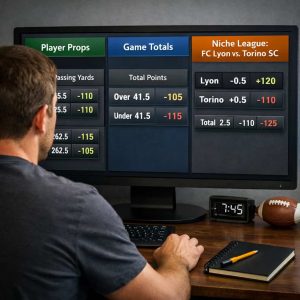
The most apparent advantage is line variation. One book might list a quarterback at 255.5 passing yards, while another sits at 262.5. That seven-yard gap is enormous. You are not betting on a different outcome. You are betting the same player in the same game, but with a much better number.
Odds differences matter too. Even when the line is the same, pricing often is not. One sportsbook might offer -110 on both sides. Another might hang -120 on the over and +100 on the under. Choosing the better price reduces the break-even point on every bet.
Props also move slowly. Injury news, role changes, and matchup shifts do not always get priced in at the same time. Books react at different speeds. Bettors who shop lines can grab value before the market settles.
Because props are often lower limit markets, sportsbooks are less aggressive about correcting minor errors. That gives patient bettors more chances to find edges without getting shut out immediately.
Totals
Totals benefit from line shopping differently. The edge is smaller per bet, but the volume makes it matter.
Points, goals, and runs tend to cluster around key numbers. In football, numbers like 37, 41, and 44 show up often. In basketball, half points can usually decide outcomes. Getting the best number around those key points has real value.
Totals also vary more than sides across books, especially in smaller games or less popular sports. One sportsbook might shade toward the over because of public betting patterns. Another might lean under based on model output. That creates openings for bettors willing to compare.
Even when lines match, odds frequently do not. Paying -105 instead of -115 does not feel dramatic. But over hundreds of bets, that difference has a measurable impact on profit or loss.
Live totals amplify the benefit of line shopping. In-play markets move quickly, and books often disagree during fast swings. A timeout, injury, or scoring run can create temporary gaps. Bettors with access to multiple books can act while those gaps exist.
Total markets are usually efficient in the long term. That means your prediction edge may be thin. Line shopping helps compensate for that. It can be the difference between breaking even and slowly losing money.
Niche Leagues
Niche leagues might benefit the most from line shopping overall.
Lower-tier soccer leagues, smaller basketball competitions, regional baseball, and emerging sports receive limited attention from sportsbooks. Lines are often copied from a market leader and then slightly adjusted. Some books adjust more than others. Some barely adjust at all.
This creates wide discrepancies. You may see totals differ by a whole goal or point spread gaps that would never exist in major leagues. Even modest betting action can move one book while another stays frozen.
Limits are usually lower, which keeps sharp money from quickly correcting prices. That leaves inefficient lines available longer. Bettors who shop lines can consistently find better numbers simply by checking multiple sportsbooks.
Odds discrepancies are common as well. One book may aggressively price a favorite. Another may hold closer to even money. In niche markets, books are less confident, and that shows in their pricing.
Another factor is timing. Opening lines in niche leagues can be soft. Some books release early and move fast. Others release late and barely move. If you compare both, you often find value without needing inside information.
For bettors who specialize in minor leagues, line shopping is not optional. It is part of the strategy. Without it, you are betting into the worst version of an already volatile market.
Why Line Shopping Matters Long Term
Line shopping does not guarantee wins. It does not turn bad picks into good ones. What it does is improve your position on every bet.
Better lines reduce variance. Better odds lower your break-even point. Over time, that improves your expected return even if your predictions stay the same.
Player props reward line shoppers because of inconsistent numbers and slow adjustments. Totals reward them through key numbers and pricing differences. Niche leagues reward them because of inefficiency across the board.
The common thread is simple. Sportsbooks do not agree on everything. When they disagree, bettors who compare options gain an edge.
Line shopping takes discipline and patience. It also requires access to multiple sportsbooks. But among all betting habits, it is one of the few that consistently pays off.
Suppose you are serious about betting, the market you choose matters. So does the price you accept. Often, the difference between the two is where profits are made or lost.